
CBE Curriculum Explained for Parents: 8 Core Competencies Your Child Will Develop
If you’re a parent in Kenya, you’ve likely heard about the CBE (Competency-Based Curriculum) but may not fully understand what it means or how it differs from the education you received. The CBE curriculum explained for parents is essential knowledge because it fundamentally changes how your child learns, what skills they develop, and how their progress is measured.
In this comprehensive guide, we’ll break down the CBE curriculum explained for parents in simple terms, explore the eight core competencies your child will develop, and explain why this modern educational approach prepares children for success in the 21st century.
What Is the CBE Curriculum? Understanding Kenya’s Modern Education Framework
The CBE (Competency-Based Curriculum) is Kenya’s national education framework that replaced the traditional 8-4-4 system. Launched in 2017, the CBE curriculum explained for parents represents a fundamental shift from exam-focused learning to competency-focused development.
Rather than measuring success solely through test scores, the CBE emphasizes developing practical skills, critical thinking abilities, and character traits that enable children to solve real-world problems.
- Key difference from traditional education: In the old system, success meant memorizing facts and scoring high on exams. In the CBE curriculum, success means developing the ability to apply knowledge, work collaboratively, think creatively, and adapt to changing circumstances.
- A child might score 85% on a math test, but the CBE also measures whether they can use mathematical thinking to solve practical problems in their community.
- Why the change was necessary: The world has changed dramatically. Jobs that existed when you were in school may no longer exist. The skills your child needs to succeed aren’t just academic knowledge—they’re the ability to learn continuously, work with others, think critically, and adapt to new situations. The CBE curriculum explained for parents makes sense when you understand that employers increasingly value these competencies over traditional academic qualifications alone.
The 8 Core Competencies: What Your Child Will Learn
The CBE curriculum explained for parents centers on eight core competencies that every child should develop. Understanding these competencies helps you support your child’s learning at home and evaluate whether their school is truly implementing the CBE or just following it on paper.
1. Communication and Collaboration
This competency focuses on helping children express themselves clearly and work effectively with others. In the CBE curriculum, children learn to communicate through speaking, writing, listening, and non-verbal means. They practice collaboration through group projects, team sports, and classroom discussions.
Why it matters: In modern workplaces, almost every job requires teamwork and clear communication. Children who develop these skills early gain a significant advantage.
2. Critical Thinking and Problem-Solving
Rather than accepting information passively, children learn to analyze, evaluate, and solve problems. The CBE curriculum explained for parents emphasizes asking questions, testing ideas, and finding creative solutions.
Why it matters: Critical thinking is the foundation for innovation. Children who can think independently and solve problems become leaders and innovators.
3. Creativity and Imagination
The CBE recognizes that creativity isn’t just for artists. It’s a competency that applies to science, mathematics, business, and every field. Children learn to generate new ideas, think outside the box, and express themselves creatively.
Why it matters: Creativity drives innovation and helps children adapt to unexpected situations. In a rapidly changing world, creative thinking is invaluable.
4. Citizenship
This competency develops children’s understanding of their responsibilities to society, their community, and the environment. The CBE curriculum explained for parents includes lessons on democracy, human rights, environmental conservation, and social responsibility.
Why it matters: Good citizens contribute positively to society. Schools like Ruai Faith Junior School integrate citizenship education with community service projects and moral values development.
5. Digital Literacy
In the 21st century, digital literacy is as important as traditional literacy. The CBE ensures children develop skills in using technology safely, effectively, and responsibly. This includes computer skills, internet safety, and understanding how technology impacts society.
Why it matters: Whether your child becomes an engineer, teacher, or businessperson, they’ll need digital skills. Early exposure ensures they’re comfortable with technology.
6. Learning to Learn
This metacognitive competency teaches children how to learn effectively. They develop study skills, time management, self-assessment abilities, and the motivation to continue learning throughout their lives.
Why it matters: The CBE curriculum explained for parents emphasizes that learning doesn’t stop after school. Children who develop strong learning skills become lifelong learners who adapt to change.
7. Personal Development
This competency focuses on self-awareness, emotional intelligence, resilience, and personal growth. Children learn to understand their strengths and weaknesses, manage emotions, set goals, and develop healthy habits.
Why it matters: Mental health and emotional well-being are crucial for success. Children with strong personal development skills handle stress, build positive relationships, and pursue their goals with confidence.
8. Cultural Identity
The CBE curriculum explained for parents includes developing pride in one’s cultural heritage while respecting other cultures. Children learn about Kenyan history, languages, traditions, and values while developing global awareness.
Why it matters: Cultural identity provides grounding and confidence. Children who understand and respect their culture while appreciating others become culturally competent global citizens.
How CBE Differs From Traditional Education
Understanding how CBE differs from traditional education helps you appreciate why this curriculum change matters. Here’s a practical comparison:
Traditional Education Focus: Memorization, exam performance, individual work, teacher-centered learning, compartmentalized subjects, standardized testing.
CBE Curriculum Focus: Application, competency development, collaborative work, student-centered learning, integrated subjects, diverse assessment methods.
Example: In traditional education, a child might memorize the formula for calculating area and score 90% on a test. In CBE, the same child might work with classmates to design a community garden, calculate the area needed, estimate costs, and present their plan to the community—demonstrating the same mathematical knowledge applied to a real problem.
The CBE curriculum explained for parents makes clear that both approaches teach mathematics, but CBE emphasizes practical application and collaborative problem-solving alongside mathematical knowledge.
How Schools Implement CBE: What to Look For
Not all schools implement the CBE equally. When evaluating whether a school truly implements CBE curriculum explained for parents, look for these indicators:
Teacher Training: Teachers should have received professional development in CBE methodology. Ask schools about their teacher training programs. Quality CBE implementation requires teachers to shift from lecturing to facilitating student-centered learning.
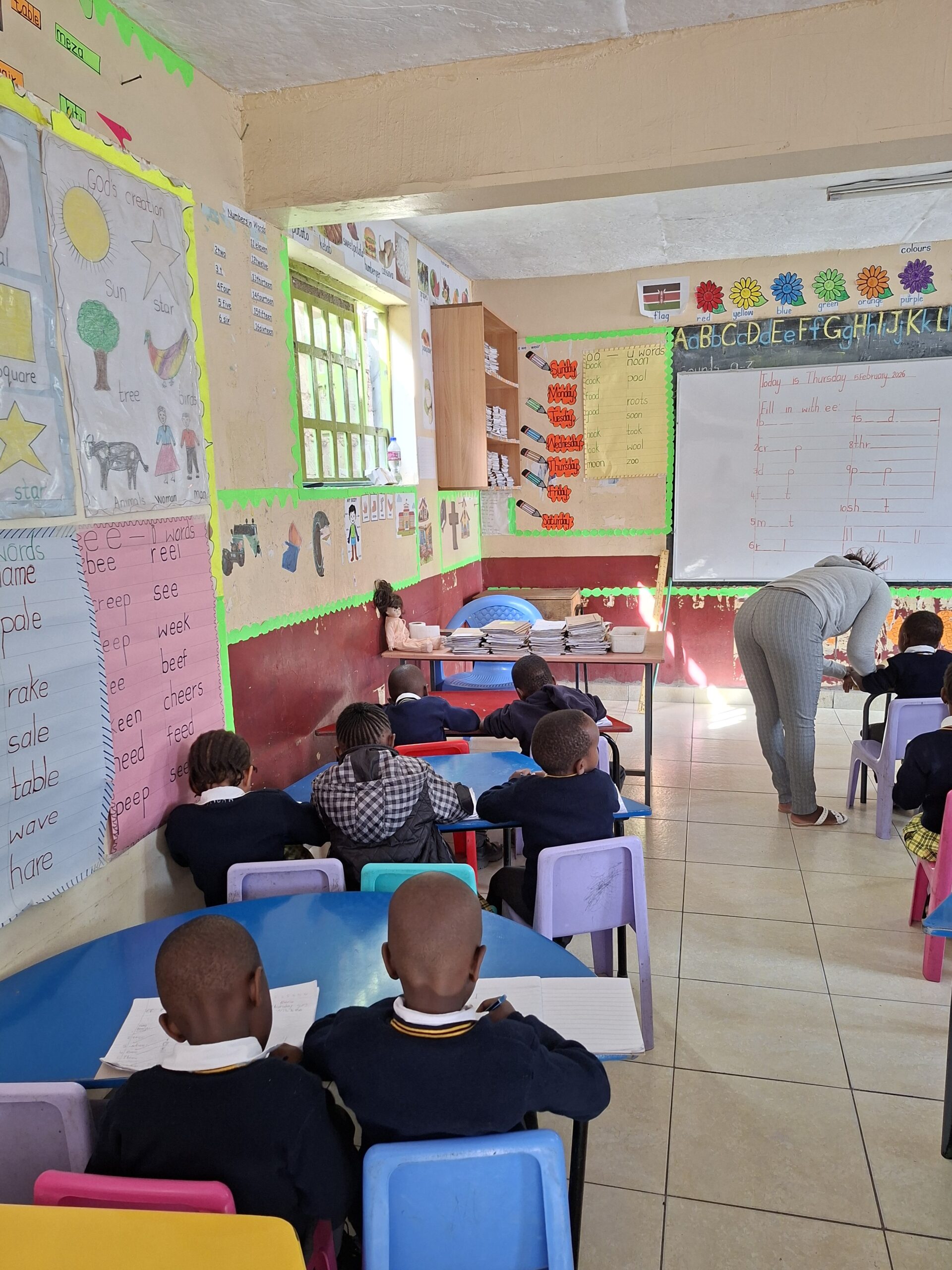
Classroom Activities: Observe actual classes. Do you see group work, discussions, and hands-on activities? Or do students sit passively while teachers lecture? CBE classrooms are dynamic and interactive.
Assessment Methods: Ask how the school assesses student progress. CBE uses diverse assessment methods including projects, portfolios, presentations, and practical demonstrations—not just written exams.
Subject Integration: The CBE curriculum explained for parents includes integrating subjects. For example, a project might combine science, mathematics, language, and social studies. Ask whether subjects are taught in isolation or integrated.
Learning Resources: CBE requires resources for hands-on learning. Look for science labs, computer facilities, art supplies, sports equipment, and library resources. Ruai Faith Junior School, for example, provides modern facilities including science labs, computer labs, and a swimming pool to support comprehensive CBE implementation.
CBE and Character Development: Beyond Academics
An important aspect of CBE curriculum explained for parents is its emphasis on character development alongside academics. The CBE recognizes that schools should nurture the whole child—academically, socially, emotionally, and morally.
Moral and Civic Values: Schools integrate lessons on integrity, respect, responsibility, and justice. Many schools, including faith-based institutions like Ruai Faith Junior School, combine CBE with religious or moral education to develop children’s character.
Extracurricular Activities: The CBE curriculum explained for parents includes recognizing that competencies develop through diverse experiences. Sports, music, drama, chess, and community service all contribute to competency development. These aren’t extras—they’re integral to CBE.
Holistic Development: The best CBE schools recognize that children develop at different rates and have different strengths. They provide support for struggling learners and enrichment for advanced learners, ensuring each child develops their full potential.
Challenges and Criticisms of CBE
While CBE represents progress, the CBE curriculum explained for parents should also acknowledge challenges. Some concerns include:
Implementation Inconsistency: Not all schools have adequate resources or teacher training for quality CBE implementation. Some schools claim to teach CBE while continuing traditional methods.
Assessment Challenges:Assessing competencies is more complex than grading written exams. Some schools struggle with consistent, fair assessment practices.
Resource Limitations:Quality CBE requires resources—science labs, technology, materials for projects. Schools in under-resourced areas may struggle to provide these.
Parental Understanding:Many parents, educated under the traditional system, don’t understand CBE and question whether their children are learning adequately. This guide addresses that concern by explaining CBE curriculum for parents.
Despite these challenges, the CBE represents a significant improvement over the traditional system and prepares children better for modern life.
How Parents Can Support CBE Learning at Home
Understanding CBE curriculum explained for parents means you can actively support your child’s learning. Here’s how:
Ask Open-Ended Questions: Instead of “What did you learn today?” ask “What problem did you solve today?” or “How did you work with your classmates?” These questions encourage reflection on competency development.
Encourage Practical Application: Help your child apply learning to real situations. If they’re learning about nutrition, involve them in meal planning. If they’re learning about money, involve them in family budgeting.
Support Collaborative Learning: Encourage your child to work on group projects and explain their thinking. Ask them to teach you what they’ve learned—teaching others deepens understanding.
Provide Diverse Experiences: Support your child’s participation in sports, music, arts, and community service. These experiences develop competencies that classroom learning alone cannot.
Communicate with Teachers: Ask teachers how you can support CBE learning at home. Quality schools welcome parent involvement and provide guidance on supporting competency development.
The Future: Why CBE Matters for Your Child’s Success
The CBE curriculum explained for parents ultimately matters because it prepares your child for a future you cannot fully predict. The jobs available in 10 years may not exist today. The skills needed will emphasize creativity, collaboration, critical thinking, and adaptability—exactly what CBE develops.
By choosing a school that genuinely implements CBE and supporting your child’s competency development, you’re investing in their ability to thrive in whatever future they encounter. Schools like Ruai Faith Junior School combine CBE expertise with modern facilities, dedicated teachers, and holistic education to ensure children develop the competencies they need for success.
Conclusion: CBE Curriculum Explained for Parents
The CBE curriculum explained for parents reveals a modern education system designed for the 21st century. Rather than focusing solely on exam performance, CBE develops eight core competencies—communication, critical thinking, creativity, citizenship, digital literacy, learning to learn, personal development, and cultural identity—that enable children to solve problems, work collaboratively, and adapt to change.
As a parent, understanding CBE curriculum explained for parents helps you evaluate schools, support your child’s learning, and appreciate how modern education differs from what you experienced. By choosing a school committed to genuine CBE implementation and actively supporting your child’s competency development, you’re giving them the best foundation for success in an uncertain future.